With the holiday planning underway with many folk, you might be planning a Motorhome holiday with the whole family – including your four-legged friend. This might be the first opportunity for many owners to travel with their pets. While this is a fun time, planning and preparation are necessary to ensure that your dog has a stress-free day.
Getting your dog ready for a trip
It’s crucial to get your dog ready for the adjustments a vacation in a motorhome will bring. If you don’t take the proper precautions beforehand, interrupting a dog’s schedule might result in an uneasy puppy. Dogs thrive on routine. The safest choice for your dog, while you’re driving, is to keep him in a travel crate while the vehicle is moving. This needs to be the right size so that the dog can stand up and turn around comfortably, but not so huge that they can pace around inside it.
Make sure the one you pick is simple to set up, store, and utilise. If your pet likes to sleep inside a motorhome, you can store it away when you’re not travelling. Also, unless you believe you’ll need it for both, try to get a travel crate made for road travel rather than air travel. A top tip to make sure they feel at home is to use their bed blanket with the smells of home, and some favourite comfort toys.
Toys
Giving your dog something durable they can enjoy, such as a plush snug rug or a frozen lickmat, is also a smart option if they don’t enjoy travelling. If your dog doesn’t often travel in a crate, make sure you get one well in advance and train them to feel at ease within it before you go. If you anticipate taking longer walks and rising earlier (or later) than usual while on vacation, attempt to gradually adjust your schedule in the weeks leading up to your trip. It’s also crucial to think about the things you’ll be doing while you’re gone and whether or not your dog has experienced these things previously. For instance, if your family enjoys frequent pub lunches, introduce your dog to the lively ambience of a bar so you can anticipate how they will respond and it won’t bother you or anyone else. Food on the road
Food on the road
Is your dog on a diet that will be challenging for you to follow while you’re on vacation? If they are fed raw, for instance, think about their diet in advance and whether it is reasonable to bring their meals with you while you are travelling. If you know you won’t be able to buy something while you’re away, make sure you have adequate supplies. You may need to alter your dog’s diet while you’re away, be sure to do so gradually in the weeks leading up to your departure. It’s better to know these things early and work out the alternatives.
Safety in the campervan
When you are both driving and parking at the campground, it is crucial to make sure your dog is secure and at ease. The travel crate will give your dog a secure space to rest in and provide a space for them to get away from everything and relax. Additionally, when travelling the create must be fastened within the motorhome so that it won’t move in the event of an abrupt halt. Keep in mind that it is against the law to leave your dog alone in a vehicle, and you risk receiving a large fine if you do.
Must-have accessories for camping
While the majority of your belongings from home will work well on your camping vacation, there are a few extras that will make your getaway stress-free. A longline leash for camping is the first thing. This may be secured with a hook into the campsite’s ground, giving your dog the freedom to move around while yet having the security of a leash. Even if your dog is taught to come when called, many campgrounds demand that they always be on a leash, so this will prevent you from being caught without one. For a quick wipe-off after a muddy stroll, a towel or two is also necessary. Your motorhome will soon get very grubby with a muddy wet dog around you. In the United Kingdom, it is the law to have your dog microchipped and wear an identification tag when in a public space. Failure to do so can result in a fine of up to £5,000, so your dog must wear an ID tag by law, and while though your address won’t mean much if you’re away, it’s crucial to have a current phone number so that you can be reached if your dog escapes. In the United Kingdom, it is the law to have your dog microchipped and wear an identification tag when in a public space. Failure to do so can result in a fine of up to £5,000.
Motorhoming With Your Dog, Holiday in Your Motorhome
Medical and safety in the outdoors
Many of the supplies in a human first aid pack may also be used on dogs, although not all of them. We advise buying a dog first aid kit if you intend to take your dog camping. Correct bandages, equipment for extracting ticks or splinters, and an emergency cooling pack should all be included. This gives you the assurance that your dog is prepared for anything.
People-friendly etiquette at your campsite
Anytime your dog is outside of your motorhome or campervan, keep it on a leash. Even if your dog is really amiable and only wants to say hello to people, not everyone like dogs. Therefore, keep them near so that no one feels uncomfortable. In light of this, it’s crucial to exhaust your pet’s energy to prevent them from being caged up. Think of it as a chance to learn more about the region and get some excellent exercise. Go for lengthy walks and keep them active with a ball. By doing this, you and your pet can both rest at the campground and while travelling.
Dog Run
Many campgrounds have a dog run where guests’ four-legged friends may run amok. If there are other dogs present at the campsite, always ask the pet owner before introducing your dog to them. Some dogs may react or become more anxious around new dogs. Keep a watch on what they find By doing this, people may rest well both at the campground and while travelling. Many campgrounds have a dog run where guests’ four-legged friends may run amok. If there are other dogs present at the campsite, always get permission from the owner before introducing your dog to them. Some dogs may react or become more anxious around new dogs. Keep a watch on what they discover; regrettably, many campgrounds have trash or other undesirables lying around. Make sure your dog isn’t picking up anything inappropriate.
So there’s just a few tips on taking your dog away with you in your motorhome or campervan.
Highland council proposes ‘aire’ camping area | HeraldScotland
It is a region that has long been troubled by unclean camping, careless littering, wild urination, and other abuses.
However, Highland Council is already preparing a camping area, or “aire,” in the style of the continent just north of Inverness and has urged landowners in the area to consider building the same facilities on their own property.
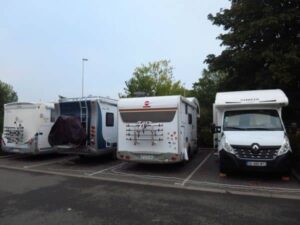
In France, aires are very popular and widely available locations to park and spend the night in a motorhome, trailer, or campervan.
Maxine Smith, the chairperson of the council’s tourism committee, has directed a campaign to solicit interest from landowners who could have space for aires.
The council has decided to launch an effort that it hopes will catch on throughout the area at the northbound parking lot and restroom facility off the A9 at North Kessock.
The plan is to expand what is now a pit stop at the entrance to the north Highlands to include amenities for motorhomes, camper vans, and caravans.
The debate follows what was thought to be one of the busiest staycation seasons because of COVID-19.
“While coronavirus and the rise in staycation demand in the UK have played a significant role in the enormous increase in demands placed on the Highlands of Scotland from across the UK, the evidence does show that motorhome ownership and rental have been increasing over the past few years,” she said.
“These considerations, along with the relatively low cost of tents and the widespread use of tents, all lead to the necessity for cooperative future management plans to meet tourism needs for summer seasons and the years to come. To ensure that we maximise the opportunities for tourism in the Highlands while minimising the risks to our communities, we will keep working with partners in the Scottish Government, NatureScot, VisitScotland, Highlands and Islands Enterprise, the Sepa, Scottish Water, Campa, and local organisations.
“The council is also eager in hearing from landowners who are interested in providing basic, short-term accommodations, or “aires,” as they are known on the continent. It may be that you are a farmer with a spare field or someone with an extra-large garden, but we need to start thinking more commercially and trying to alleviate any issues caused by motorhomes and camprvans, in addition to providing short overnight basic stopping facilities for people on longer journeys that bring economic benefit to local businesses from those spending the night at an aire. The Highlands are open to visitors, but we must ensure that the necessary infrastructure is in place to accommodate them.
In contrast to campers and motorhome owners who want to park directly next to the location they wish to use as their playground for the upcoming week or fortnight, Councillor Allan Henderson noted that aires only serve as an overnight option for individuals who are on the move.
Aires are, to a certain extent, a fantastic concept, but not for your true vacation, he remarked. People who are on vacation at the beach and wish to park there for the duration of their trip won’t benefit from it.
There are many types of aires in France, some of which are found at motorway service stations and are equipped with a shower area, power, and a location to empty and restock their water tanks. However, these have a 24-hour maximum stay limit and are frequently busy due to the constant arrival and departure of vehicles.
The most common kind of aires are sizable gravel spaces that may be reserved for up to four days, include power and toilet cleaning facilities but nothing else, and are located close to a small town.
Despite the rising popularity of motorhome and campervan travel north of the border, there aren’t many places to park a motorhome overnight in the area other than commercially run campgrounds and caravan parks.
A few of these locations are now being developed, with community-led initiatives being carried out at Lochinver, Helmsdale, Brora, Bonar Bridge, and Cromarty.
Highland council members also decided to pressure the Scottish Government to include legislation establishing a tourism tax in upcoming plans.
The Transient Visitor Levy Bill, which was scheduled to be tabled last Easter but was postponed owing to the pandemic, was not included in the current government plan, according to council members on the tourism committee.
The council members decided to request clarification from the government in a letter from Mrs. Smith, the tourism chairperson.
In order to support the hotel and tourist industries for the foreseeable future, the committee also decided to write to the UK government and request a VAT decrease that would be permanent.
How to Improve Your Motorhome Fuel Consumption
Now the summer is behind us, many vacationers will be packing up their camper vans and motorhomes.
The pandemic resulted in an increase in motorhome ownership, but with fuel prices at all-time highs, it’s easy to be put off from taking a road trip.
SulNOx Group, a fuel technology company, has compiled a list of pointers and ideas to help you get the most out of your motorhome and make your vacation as money friendly as is possible.
Service your vehicle
Getting your motorhome serviced is crucial because it makes sure that it is in good functioning order, meaning it will be more efficient and less likely to break down.
You could do it yourself or take your motorhome to a local mechanic if you’re not mechanically inclined.
Make sure your tyres are in good shape.
Because your tyres are the only portion of your car that makes contact with the road, they must be in perfect condition. This is especially critical in Motorhomes, where the increased weight can magnify any faults and make them considerably more harmful. Make sure your tyres have the correct pressure, this is probably the single most important thing that will affect fuel consumption after your driving habits.
Motorhome fuel economy is harmed by excess weight, so shed as much as you can. Carry the minimum amount of water and make sure your waste water tank is empty before setting off.
Check that your tread depth is greater than the legal limit, and that the rubber is in good condition, especially if you haven’t driven it in a while.
Reduce your weight
Fuel economy is harmed by excess weight, so shed as much as you can. This is true in any car, but it’s especially difficult in a motorhome, where you’ll likely have a lot of stuff needed for cooking, sleeping and outdoor items, but everything you can get rid of will assist you in the long run. Is Motorhome is Overweight?
Consider how you drive
Speed, like weight, has a significant impact on fuel economy. According to SulNOx, most campers will be most efficient between 55 and 60 mph, with every 5 mph over that reducing efficiency by around 10%.
Keep in mind that accelerating quickly consumes more fuel, so maintain a steady throttle and gradually increase your speed.
Some quick hints
Air conditioning can be a lifesaver when the weather is hot. Turning off the air conditioning while driving, on the other hand, can boost fuel use by as much as 10% if the summer is unusually British and you can get do without it.
Finally, when you come to a complete stop, do not leave the engine running. It’s fine for brief amounts of time, such as at traffic signals or junctions, but if you know you’ll be stopped for more than a few minutes, turn off your engine.
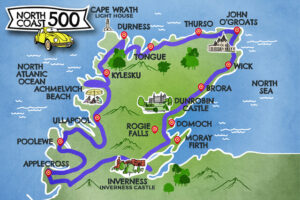
The 516-mile route around Scotland’s stunning north shore is a legendary Scottish motorhome road trip. To help you have the greatest Scottish vacation ever, we give highlights, suggestions for activities and things to do along the route, suggested NC500 campgrounds, and travel information.
The route is not cast in stone and it is very much encouraged to venture off the route and explore the smaller communities along the way. This is where a small amount of planning is needed but don’t overthink it, just take your time, the leisurely pace will make the whole experience much more enjoyable.
NC 500 Route
The NC500 Route
The North Coast 500 route, which begins and ends in Inverness, travels through lonely and rugged areas along Scotland’s stunning shoreline. The NC500 route is one of the must-do motorhome routes in the UK, featuring dramatic roads and amazing vistas.
Many people wonder how long it takes, and the answer is always dependent on how much time you have! You might do the entire thing in a couple of weeks (at most), or you could pick a section that interests you, take your time, and be careful on the road.
Inverness
Inverness, one of Scotland’s seven cities, is located in the south of the Highlands, on the banks of the River Ness, and serves as both the start and finish point for your North Coast 500 journey. Inverness is a lively city with a great range of sites to see and activities to do, both in the city itself and in the surrounding region, crowned by a wonderful castle and tastefully planted with flowers.
Inverness
Highlights
Follow in the footsteps of the many legendary Loch Ness monster hunters. Hire a boat, take a packed lunch and your camera out on the water. You won’t see Nessie, but you will be surrounded by beautiful landscape, fresh air, and plenty of space to relax.
Make your way to Inverness’s evocative Old Town, the Victorian Market will provide you with all the Scottish souvenirs you could ever want!
Visit the eerie battlefield of Culloden, the site of the Jacobite rising’s last and brutal fight which led to the fall of Charles Stuart’s army in 1745. At the adjacent Culloden Visitor Centre, you can learn much more about this pivotal period in Scottish history.
Admire Inverness Castle, which stands high on the banks of the River Ness and has a pink crenellated exterior. The Area around Inverness is home to a total of 67 Scottish castles!
A hike up to Craig Phadrig, which is located to the west of the city, provides excellent forest treks and magnificent views of the Moray Firth, it was also formerly the stronghold of Pictish rulers.
Fans of the novel and television series ‘Outlander’ may also explore the region’s filming locations and venues. Outlander Locations
The Best Campsites in Inverness
Ardtower Caravan Park is in a beautiful setting, high above Inverness and close to Culloden. An award-winning site with modern facilities and spacious hard-standing pitches, this is a great base from which to explore Inverness and the surrounding area.
Bunchrew Caravan Park is on the edge of Beauly Firth and enjoys wonderful views over the water to Ben Wyvis and the hills beyond. Another great spot to explore from.
Situated on the banks of the Caledonian Canal, Torvean Caravan Park is located just over a mile from the centre of Inverness, perfect for those wanting to explore the city.
Easter Ross
Easter Ross is a historic territory north of Inverness, bordered on the east by the Moray Firth, the north shore of the Cromarty Firth, and the south shore of the Dornoch Firth.
There’s a lot to enjoy here, with coastal settlements giving spectacular vistas and lots of sea life to look out for, as well as the Highland remoteness in the inland forestry regions. Take your time and enjoy the route northwards.
Best Bits
Learn about The Picts at the Tarbat Discovery Centre in Portmahomack, as well as the lovely seaside villages of Shandwick, Balintore, and Hilton. The Picts were a wild tribe in late Iron Age Scotland who held their territory and stopped the Romans from capturing all of Britain.
Visit the Dalmore Whisky Distillery in Alness for a tour. The Dalmore whiskies are considered one of the top luxury whiskey brands in the world, and they retail for thousands of pounds. Take a tour and maybe a wee dram (but only if you’re not driving!) to see what all the hype is about.
Hike up to the massive Fyrish Monument for panoramic views of the Cromarty Firth.
Hike up to the massive Fyrish Monument for panoramic views of the Cromarty Firth and Ben Wyvis Mountain.
Visit the Touchstone Maze near Strathpeffer, which is made out of 81 different rock types from all across Scotland and is an excellent opportunity to learn about the country’s complicated geology.
Walk up to the magnificent Black Rock Gorge, a one-mile-long, 40-meter-deep gorge in the rocks carved out by the River Glass pouring down to the Cromarty Firth during the Ice Age. The ravine was used as a filming site for ‘Harry Potter and the Goblet of Fire’ in 2004 and is essential for Harry Potter lovers.
Campsites in Easter Ross
The Black Rock Caravan Park in Evanton, about a mile off the A9 North Coast 500 route, is in a fantastic location. This is a fantastic stop on the route north, with excellent touring pitches and services.
Dornoch Caravan & Camping Site is a quiet, family-run campground in the Scottish Highlands. The east coast property, which is surrounded by gorgeous rural and coastal landscapes, with vast views of the magnificent Dornoch Firth.
The Black Isle’s Fortrose Bay Campsite is located on a pebble beach with direct access to the Moray Firth and spectacular views. Chanonry Point, a wide natural sand bar to the east of the campground, is a twenty-minute walk away.
Caithness
Caithness lies right at the top of the UK, home to John O’Groats and Dunnet Head, the most northerly point of the UK mainland. Because it is so far north, it is possible to see the Northern Lights from here under ideal conditions and Sun rises at 4am and Sunsets as late as 10:35 pm in mid-June.
The broad open countryside is rich in ancient artefacts, and the rugged coastline has soaring sea stacks and towering headlands, which are home to puffins and many other marine birds.
Highlights
See the enigmatic Hill O’Many Stanes, where 200 tiny stones were set out in a radiating pattern over 4,000 years ago…for no apparent reason.
The five-mile stroll from John O’Groats to Duncansby Head is a great opportunity to take in the sea air then continue along the scenic coastal route to see the two magnificent pointed sea stacks.
Visit the Castle of Mey, which The Queen Mother purchased in 1952 and had it rebuilt after it was abandoned. This is an amazing site, with fantastic grounds and an interesting insight into a castle that functioned as a holiday getaway for the royal family.
Explore the route’s diverse and unique brochs. The broch is a massive stone tower and ancient house found solely in Scotland, dating back to 500 B.C. Both Dunbeath Broch and Nybster Broch are great examples, and both are near to the Caithness Broch Centre, where you can learn more about them.
Take (another) brisk stroll across the wild and untamed environment of Dunnet Head, an RSPB nature reserve. You could spot puffins in this loud sea-bird nature reserve if you’re lucky, especially if you go during the nesting season, which runs from late spring to early summer.
Best Campsites in Caithness
Dunnet Bay Caravan & Motorhome Club Site is a great place to stay. You do not have to be a member to stay, but you will receive a discount if you are. It’s one of the nicest campgrounds on the north coast, ideal for individuals who prefer privacy, breathtaking vistas, and lengthy beach walks.
Dunnet Bay
Murkle Caravan Park in the same-named settlement is simple, yet it provides everything you need and is pet-friendly. This is a wonderful setting for a few days exploring the nearby region, with a nice one-mile beach stroll right from the property.
Windhaven Cafe, Camping and B&B, the most northerly campsite on the UK mainland, is a favourite NC500 camping destination. In addition, the café is the furthest north on the NC500! From its fantastic cliff-top location, the facility overlooks Brough Bay, where you can relax and watch the seals from their seal observation point.
Sutherland
A substantial portion of the NC500 route runs through this rugged and magnificent countryside, which is one of Europe’s remaining big wildernesses.
The shoreline on this portion of the journey is unspoiled, with wide sandy beaches and the jagged and aptly called Cape Wrath cliffs.
This is a favourite section of the journey for many people because of the breathtaking beauty and rich natural history.
Highlights
Spend a day at Dornoch, a lovely ancient town in Sutherland’s southeastern corner that overlooks the same-named firth. The town is definitely worth a visit, with its 13th-century cathedral, mediaeval prison, and Dornoch Castle, a former bishop’s seat, among its attractions.
Smoo Cave
Smoo Cave has one of the biggest entrances to any sea cave in Britain, measuring 15m high and replete with its own waterfall.
Enjoy the raw and wild sea air of Cape Wrath, a site of Special Scientific Interest and mainland Scotland’s most northerly point. This is a really secluded location, only reachable by ferry or minibus.
Hike to Sandwood Bay Beach to see the Am Buachaille sea stack, a vestige of millions of years ago when the Highlands and North America were united.
The UNESCO Global Geopark of the North West Highlands is worth a visit, it has a geological rich landscape of world-class quality, significance, and relevance. And a fantastic site to study the 3,000-million-year old geological history of one of Europe’s least-populated regions.
Explore Stoer Head, a few miles north of [Lochinver’s] charming hamlet. Beautiful views of islands and interior bays can be seen here, as well as the stunning white Stoer Lighthouse and the magnificent Old Man of Stoer, a 60-meter-high sandstone sea stack.
Stoer Head Lighthouse
With white sands and brilliant blue waves, Achmelvich Beach is one of the most beautiful beaches in the vicinity. It’s a hotspot for water sports like windsurfing and water skiing, and if you have an inflatable canoe or SUP board, here is a perfect spot to inflate it and get out on the loch. You may find it easier to take the A894 main road from Ullapool and bypass the bulk of the B869 from Kylesku to Lochinver, which may be a difficult route for larger vehicles.
Best Campsites in Sutherland
Stay at the gorgeous Clachtoll Beach Campsite, which is situated on the edge of Clachtoll Beach and features crystal blue water and fantastic snorkelling; it’s one of Scotland’s top campgrounds. Before driving there, double-check the roads and the size of your vehicle; driving the long route on the coastline B869 won’t work if you’re in a huge motorhome.
Because you won’t have to go as far down the B869, the Shore Caravan Site at Achmelvich Bay would be a better alternative. This is one of our favourite North Coast 500 campsites since it is located on the beach and has pleasant and welcoming proprietors.
Sango Sands Oasis Campsite, set on cliff tops above magnificent beaches with wonderful sea views, is highly recommended for camping. This is a spot where you might easily spend a week exploring the surrounding region and discovering the vistas and wildlife in the region.
Wester Ross
Known for its stunning scenery, which includes old glens, Caledonian woods, steep mountain peaks, and beautiful beaches. The drive through Wester Ross is an experience and a highlight for many NC500 tourists, with classic roads and breathtaking views. There are loads to keep you occupied in this lovely region of Scotland, from bagging a Munro to whale watching, touring castles, and admiring stunning gardens.
Highlights
You could encounter dolphins, otters, sharks, seals, puffins, and even a white-tailed eagle if you go whale watching from Gairloch. From mid-June to late September is the ideal season to watch whales off the west coast of Scotland.
Admire the Corrieshalloch Gorge, a magnificent gorge that passes across a lush Highland landscape. Watch as the River Droma cascades over a succession of waterfalls, culminating in the massive 45-meter Measach Falls.
Inverewe Garden
Inverewe Gardens, positioned high on a peninsula at the edge of Loch Ewe, is a verdant, tropical sanctuary. One of Scotland’s most popular botanical attractions, this world-famous historic garden is bordered by estates managed for conservation.
Explore the forests of the UNESCO Biosphere Reserve Beinn Eighe National Nature Reserve, which are home to 350-year-old Scots Pines, relics of the ancient Caledonian forest that originally stood here.
Climb Beinn Eighe, one of Torridon’s greatest Munros (mountains that exceed 914 metres), one of the NC500’s 37 Munros. From the peak, the vistas of the Torridon Hills are just breathtaking.
Beinn Eighe
Drive the fabled Applecross Pass, one of Scotland’s greatest and highest roads. Bealach na Bà is a small slip of a road with hairpin fast turns and steep gradients that your motorhome may or may not be able to handle. If you insist on going ahead, do some study on the ideal times to travel and potential risks to be wary of, especially if this is your first trip on this sort of road (there are loads of videos on YouTube). Many motorhomes are capable of doing so, but you should only undertake it if you are competent at driving your motorhome in these conditions.
As an alternative to getting to Applecross, the coastal road via Ardheslaig and Kalnakill is fantastic and has equally good if not better views and some superb places to stop for coffee or lunch.
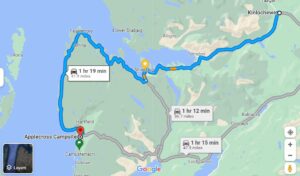
The three videos below are driving to Applecross in a 7.5m Autotrail Motorhome, via Shieldaig along the coastal road. The first video is a heavily edited version, about 3:30 long. The second two cover the whole drive in 2 parts, one at 59 minutes and the other at about half an hour. Combined these two are the entire drive from Kinlochewe to Applecross.
Kinlochewe to Applecross via Shieldaig coastal route
Kinlochewe Caravan Club Site sits at the foot of Beinn Eighe’s craggy slopes, at the end of a scenic journey from Achnasheen down Glen Docherty. Stop here for a few days to explore the Torridon Hills and the surrounding region.
The Applecross Campsite is located at the bottom of the pass, which snakes down to Applecross. It’s a great place to stop after a long day of travelling, with great views of Applecross Bay and Skye. The Applecross Inn provides great meals and in the summer, a relaxing evening watching the sun go down over a few drinks.
What time of Year is the best?
Spring
Late April is an excellent time to take a road trip to Scotland. As the milder weather arrives and the transition to summer begins, the countryside comes alive with wildflowers and newborn animals. However, it will be cold, especially at night, and you will require some form of heating in your vehicle.
Summer Summer is one of the greatest times to visit Scotland in a motorhome, with summer temperatures averaging approximately 20°C. On the downside, popular routes, attractions, and North Coast 500 motorhome stops (both campsites and popular wild camping spots) will be crowded, so a summer road trip through Scotland will necessitate a little more planning, and you may need to book your favourite North Coast 500 campsites ahead of time. During school holidays is the busiest so try and plan around them, but note, Scottish School summer holidays are different to England’s.
The months of July and August are also the worst for biting midges, especially if you plan on visiting the west coast, where they are most prevalent. They love a still, warm and humid day just after a rainy spell. There is repellant on the market such as Smidge and Avon’s Skin So Soft, the latter used by the army when on exercise. Hats that have mosquito nets are a great form of defence and, they are a favourite with fishermen.
Autumn
Autumn is a fantastic season to visit Scotland in a motorhome since the autumn colours are some of the most spectacular in the world, and much of the tourist traffic has left, and the roads are much quieter.
Winter
Winter — Visit Scotland during the colder months for winter sports, stunning scenery, and the chance to view the Northern Lights, or ‘Mirrie Dancers,’ as they are commonly referred as in Scotland. As a general approximation, the country averages 15-20 snow days per year, with the Scottish Highlands seeing over 100 snow days per year, therefore certain routes may be blocked. Autumn is a fantastic season to visit Scotland in a campervan since the autumn colours are some of the most spectacular in the country.
Is it possible to camp in a campervan in Scotland?
In Scotland, there are lots of motorhome wild camping spots. Park4Night is a great way to discover the finest NC500 wild camping areas and campsites but make sure you respect the restrictions. There is a post here to give a few pointers on what to do and not to do.
Is it possible to rent a motorhome to travel the NC500 route?
Yes, you certainly can! Check out Open Road Scotland if you’re looking for an NC500 Scotland motorhome rental. Within three hours, you can pick up your Motorhome in Glasgow and be in Inverness. Open Road Scotland also rents out campervans and motorbikes so no matter what kind of road trip you’re looking for, they’ve got everything you’ll need.
Are there any roads on the NC500 that aren’t appropriate for heavy vehicles?
In certain spots, driving the North Coast 500 in a motorhome may be difficult, and there are a few routes you may wish to avoid, as well as several that would be a genuine challenge in a larger van. The North Coast 500 official guide is a great source for information on the route.
In general, campervan and motorhome drivers should keep the following in mind:
You should be comfortable driving on single track roads and you must be familiar with reversing your vehicle appropriately and securely.
Use a layby or one of the passing places if you are travelling at a leisurely pace to allow other road users to pass you safely.
Travelling in convoy, especially on single-track roads, can cause traffic congestion. Travel at least one passing place location apart at all times and consider two-way communication between your vehicles. This greatly helps with the separation of your convoy allowing cars to pass you and oncoming vehicles to move between you and the rest of your convoy.
Here are a few tips to keep in mind
Just take your time. It would be a pity to rush because there is so much to see and do along this wonderful route. You could do everything in seven days, but two or three weeks will give you the opportunity to explore and learn about this fascinating region of Scotland.
Always respect the Scottish Outdoor Access Code, whether you stop at NC500 campgrounds or wild camp since it helps to maintain the delicate flora and animals of this lovely nation.
The local authorities may impose limits on when motorhomes can use the road from time to time, many are beginning to provide European Aire style places to park up for the night or a few days. Check the official North Coast 500 website ahead of time.
Regularly check ahead to see what attractions are off the North Coast 500 motorhome route map that you might want to divert to — this is where you’ll discover the true hidden treasures and off-the-beaten-path locations, including fantastic wild camping options.
Make sure to stop and talk with other motorhomers about routes, limits, and favourite locations to visit — you’ll discover a lot of hidden treasures this way along the North Coast 500!
In the summer, book campsites ahead of time to avoid disappointment when you arrive.
If at all feasible, get a satnav that you can customise for your Motorhome if possible. This will allow you to avoid any restricted routes that may not be suited for your vehicle’s size, as well as any roads that are blocked due to bad weather.
Please dispose of any motorhome waste and rubbish appropriately and leave no evidence of where you’ve been, whether you’re wild parking in your camper for lunch or visiting campgrounds along the North Coast 500.
Many regions have restricted 3G and 4G services, so if you have vital information, insurance documents, or reservations, make sure you download them before leaving Inverness.
Midges are a part of life in Scotland, especially along the NC 500 route’s west coast. Their bites can range from moderately uncomfortable to creating an allergic reaction, so avoid them if at all possible on your trip.
Travel between November and February, which is the low season.
Use your fly screens at all times if you have them.
Before dusk, change into long sleeves and trousers and wear a midge veil or cap. Also socks and they have a liking to ankles believe it or not.
Parking or camping near stagnant water is not a good idea.
Make your way to a windy location to spend the night, but decide which is the worst first!
Everything has its first time, and when it comes to driving a motorhome there are a few things you need to keep in mind when driving a motorhome for the first time.
No matter who you are, any ability you have now, whether it is cooking, driving, or even walking, was acquired at some point. The notion of driving a motorhome for the first time may seem intimidating, but, like everything else, it won’t take long for you to get used to it, and you’ll enjoy the feeling of being behind the wheel as much as the freedom it provides.
However, if you need a little more assurance, we’ve put up a list of items to bear in mind before your first time driving a motorhome.
Why It’s easier than you might think to drive a motorhome?
The vast majority of motorhomes do not require any special skills or training to operate. Although they are larger than a car, anyone who can drive a car can drive a motorhome. This depends on your driving license, basically, if you passed your driving test before January 1997, you have a C1 entitlement which means you can drive a vehicle over 3500kg up to 7500kg. That said the vast majority of motorhomes are 3500kg or under. We will cover this in more detail in another blog.
Anyone with a regular driver’s license can drive a motorhome because the controls are the same as in a car. They’re a little bigger, but the controls are the same, so you shouldn’t have any trouble setting them up.
The wing mirrors are larger – your rearview is limited, but the wing mirrors are massive, giving you plenty of visibility down each side of your priory Rentals motorhome.
The driving position is superior — a motorhome’s cab is much higher than your car’s, giving you a fantastic view of the road ahead and all around you.
Long-distance van drivers want a comfortable place to sit, so motorhomes take top-of-the-line van seats and add luxurious upholstery and additional driver amenities.
You don’t feel the weight as much as you might imagine – motorhomes are much larger and heavier than your car, but they’re built on the foundations of heavy-duty commercial trucks designed to transport large cargo. The steering and other controls were created with the goal of making moving items significantly heavier than a motorhome body.
How to Get the Most Out of Your Motorhome
If you let it, driving a motorhome may be a soothing, almost serene experience. Allow your driving ability to change and the stress in your body to dissipate with each passing hour.
You’re not in a hurry, so don’t rush. When you’re driving your car, you’re probably going somewhere for a certain reason, usually at the same time as everyone else on the road, and you need to be somewhere at a specific time. With a motorhome, however, this is not the case. You’re not on a timetable; you’re on your own schedule, so relax and enjoy the ride. Take it slowly, steadily, and comfortably.
Allow each maneuver to be a special occasion – motorhomes do not dart in and out of traffic; instead, they move slowly and thoughtfully. Plan ahead of time, signal early, and sweep gracefully from lane to lane.
Don’t be hesitant to ask for assistance when parking — you’re unlikely to be traveling alone, so use your passengers to assist you. When it’s a group effort, there’s less tension.
The Best Ways to Drive a Motorhome
Driving a motorhome is similar to driving a car, with the exception that you must account for the extra size, weight, and length when driving and parking.
Reverse into parking places — it’s usually easier than driving forwards, and it makes driving out a lot easier and less stressful – pedestrians don’t seem to notice you’re not looking!
Take corners and bends much wider – It’s simple to get your motorhome’s front wheels around a corner, but you’ll need to make sure the back wheels do as well, so drive a little past the corner while turning.
Gently accelerate and brake – motorhomes aren’t designed for quick 0-60 times, and their weight means that 60-0 takes longer as well. Gradually increase your speed, and use your enhanced driving position to prepare in advance and brake sooner when necessary.
On vulnerable routes, be extra cautious — motorhomes are high-sided vehicles that are quite lightweight for their size. This means you’ll be more aware of crosswinds, so take it easy if the weather changes.
Know how much height of your motorhome – There should be a note in the manual or in the cab of the Motorhome telling you how tall it is. Keep an eye out for signs that say “max headroom” or “low bridge.” Many sat-navs can also be programmed to keep away from low bridges.
Pull in to passing places on single-track roads — Do you remember being caught behind caravans for miles, hoping the driver would pull over to allow others to pass? Now’s your time to show those motorhomer’s how it’s done and earn some extra positive energy!
Don’t ever be frightened to give driving a motorhome.
When it’s all said and done, there’s nothing stopping you from climbing into the enormous plush chair that serves as the driver’s seat and taking the wheel of a luxury motorhome. Driving a motorhome will be far easier than you might imagine, and we’re confident that when you’ve done it once, you’ll want to do it, again and again, to enjoy life at a slower pace, both on the road and at the campsite.
Why not join our Facebook Group and sign up for our Newsletter for Tips and Suggestions, and when new products are released
Check out the Useful Links Page for more goodies







 NC 500 Route
 Inverness
 Dunnet Bay
 Smoo Cave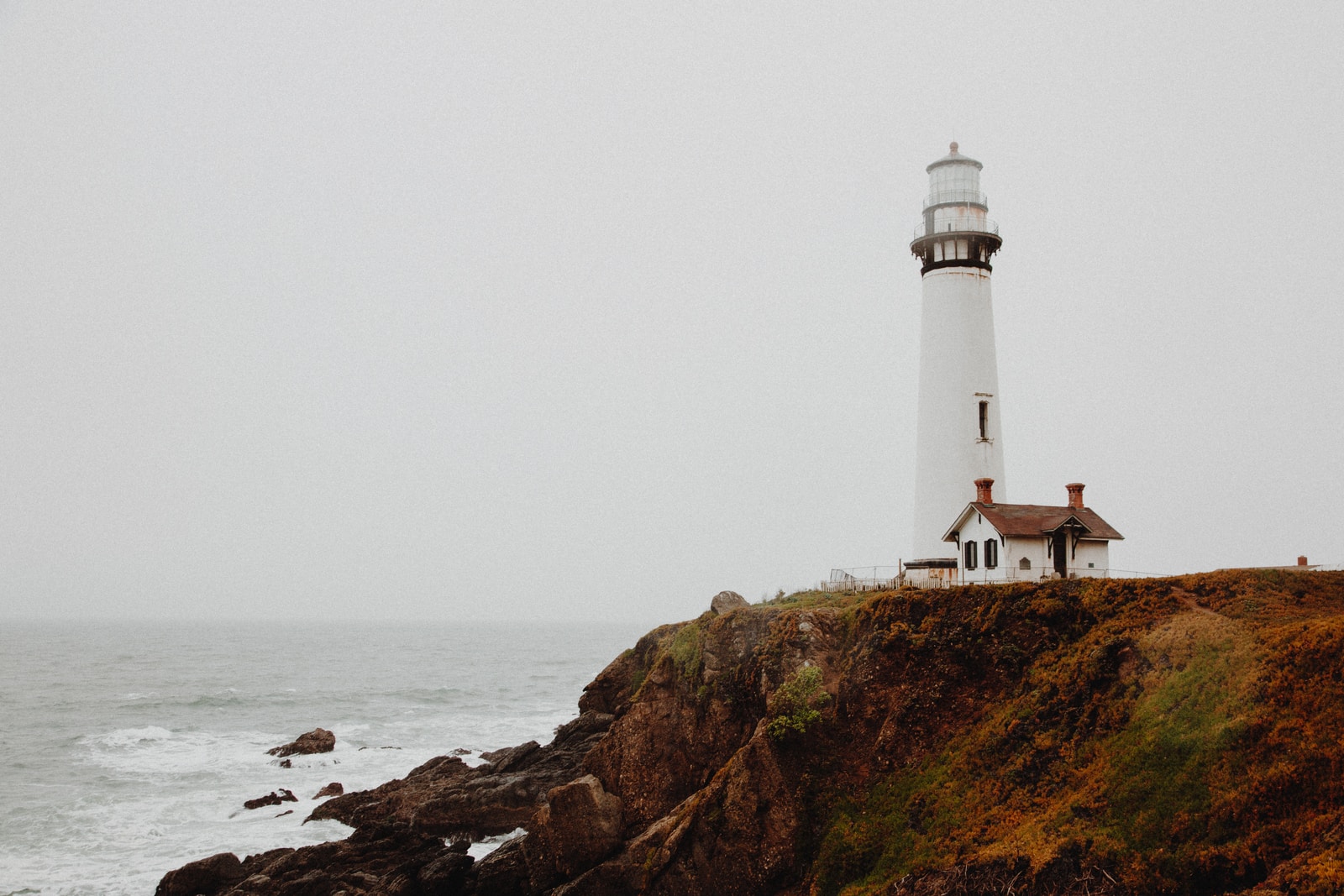
 Inverewe Garden
 Beinn Eighe
 Kinlochewe to Applecross via Shieldaig coastal route