Category: Motorhome Hire
Highland council proposes ‘Aire’ camping area
Highland council proposes ‘aire’ camping area
Highland council proposes ‘aire’ camping area | HeraldScotland
It is a region that has long been troubled by unclean camping, careless littering, wild urination, and other abuses.
However, Highland Council is already preparing a camping area, or “aire,” in the style of the continent just north of Inverness and has urged landowners in the area to consider building the same facilities on their own property.
In France, aires are very popular and widely available locations to park and spend the night in a motorhome, trailer, or campervan.
Maxine Smith, the chairperson of the council’s tourism committee, has directed a campaign to solicit interest from landowners who could have space for aires.

The council has decided to launch an effort that it hopes will catch on throughout the area at the northbound parking lot and restroom facility off the A9 at North Kessock.
The plan is to expand what is now a pit stop at the entrance to the north Highlands to include amenities for motorhomes, camper vans, and caravans.
The debate follows what was thought to be one of the busiest staycation seasons because of COVID-19.
“While coronavirus and the rise in staycation demand in the UK have played a significant role in the enormous increase in demands placed on the Highlands of Scotland from across the UK, the evidence does show that motorhome ownership and rental have been increasing over the past few years,” she said.
“These considerations, along with the relatively low cost of tents and the widespread use of tents, all lead to the necessity for cooperative future management plans to meet tourism needs for summer seasons and the years to come. To ensure that we maximise the opportunities for tourism in the Highlands while minimising the risks to our communities, we will keep working with partners in the Scottish Government, NatureScot, VisitScotland, Highlands and Islands Enterprise, the Sepa, Scottish Water, Campa, and local organisations.
“The council is also eager in hearing from landowners who are interested in providing basic, short-term accommodations, or “aires,” as they are known on the continent. It may be that you are a farmer with a spare field or someone with an extra-large garden, but we need to start thinking more commercially and trying to alleviate any issues caused by motorhomes and camprvans, in addition to providing short overnight basic stopping facilities for people on longer journeys that bring economic benefit to local businesses from those spending the night at an aire. The Highlands are open to visitors, but we must ensure that the necessary infrastructure is in place to accommodate them.
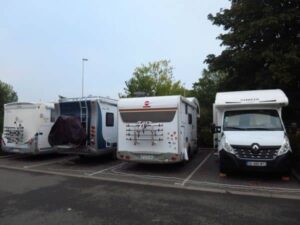
In contrast to campers and motorhome owners who want to park directly next to the location they wish to use as their playground for the upcoming week or fortnight, Councillor Allan Henderson noted that aires only serve as an overnight option for individuals who are on the move.
Aires are, to a certain extent, a fantastic concept, but not for your true vacation, he remarked. People who are on vacation at the beach and wish to park there for the duration of their trip won’t benefit from it.
There are many types of aires in France, some of which are found at motorway service stations and are equipped with a shower area, power, and a location to empty and restock their water tanks. However, these have a 24-hour maximum stay limit and are frequently busy due to the constant arrival and departure of vehicles.
The most common kind of aires are sizable gravel spaces that may be reserved for up to four days, include power and toilet cleaning facilities but nothing else, and are located close to a small town.
Despite the rising popularity of motorhome and campervan travel north of the border, there aren’t many places to park a motorhome overnight in the area other than commercially run campgrounds and caravan parks.
A few of these locations are now being developed, with community-led initiatives being carried out at Lochinver, Helmsdale, Brora, Bonar Bridge, and Cromarty.
Highland council members also decided to pressure the Scottish Government to include legislation establishing a tourism tax in upcoming plans.
The Transient Visitor Levy Bill, which was scheduled to be tabled last Easter but was postponed owing to the pandemic, was not included in the current government plan, according to council members on the tourism committee.
The council members decided to request clarification from the government in a letter from Mrs. Smith, the tourism chairperson.
In order to support the hotel and tourist industries for the foreseeable future, the committee also decided to write to the UK government and request a VAT decrease that would be permanent.
Highland council proposes ‘Aire’ camping area
Are you thinking of hiring a motorhome?
Driving a motorhome for the first time in the UK
Tips on Wild Camping in Scotland
Disaster with a motorhome cupboard
Sign up for Johnny’s Back Yard online Store for Motorhome & Caravan Accessories Newsletter and we will let you know when new products are released.
Website Store https://www.johnnysbackyard.co.uk
Check out the Useful Links Page for more goodies
Newsletter link: http://eepurl.com/hND3Ir
Support the channel https://www.paypal.com/donate/?hosted_button_id=MZ4U3STTL4YV6
YouTube https://www.youtube.com/channel/UC311CaE4YoIEKkJLIJCEl7Q
Twitter https://twitter.com/MotorhomeandC
Instagram https://www.instagram.com/johnnyburr3
Facebook https://www.facebook.com/groups/179155772711444
Pinterest https://www.pinterest.co.uk/johnnyburr3
Buy Me A Coffee https://www.buymeacoffee.com/johnnyburr
How to use Motorhome Chemical Toilets
How to use Motorhome Chemical Toilets
How to use Motorhome Chemical Toilets
Ten years ago the “walk of shame” was left by many as a (blue-collar) job to do in the hours of darkness. Some people even today are scared off by the prospect of using a toilet when camping, but in recent years it’s become a pleasant experience, depending on which way you look at it. 😉
Satisfying
Personally, I used to be intimidated by the whole process, but after three or four times it became rather satisfying (WHY? I hear you ask) Topping up with fresh water and emptying the toilet cassette before leaving a campsite, is like driving a car that has been thoroughly cleaned and waxed and as we all know a car in that state drives like a dream! Nearly all campsites have ultra-clean, and I mean ultra-clean “Elsan points” or toilet emptying facilities, with air fresheners, hand washing basins, a hose to rinse the cassette out and a flush mechanism similar to your toilet at home.
 Smells
The days of foul-smelling chemical toilets and unpleasant emptying areas are long gone. Modern cassettes are easy to clean and even easier to empty with the shortest glimpse of the contents gliding into the oversized bowl never to be seen again. The cassettes have a pressure equalising button near the handgrip that allows air in as the contents flow out and prevents the glugging sound and more importantly the dreaded splashback.
Chemical toilets come in several forms.
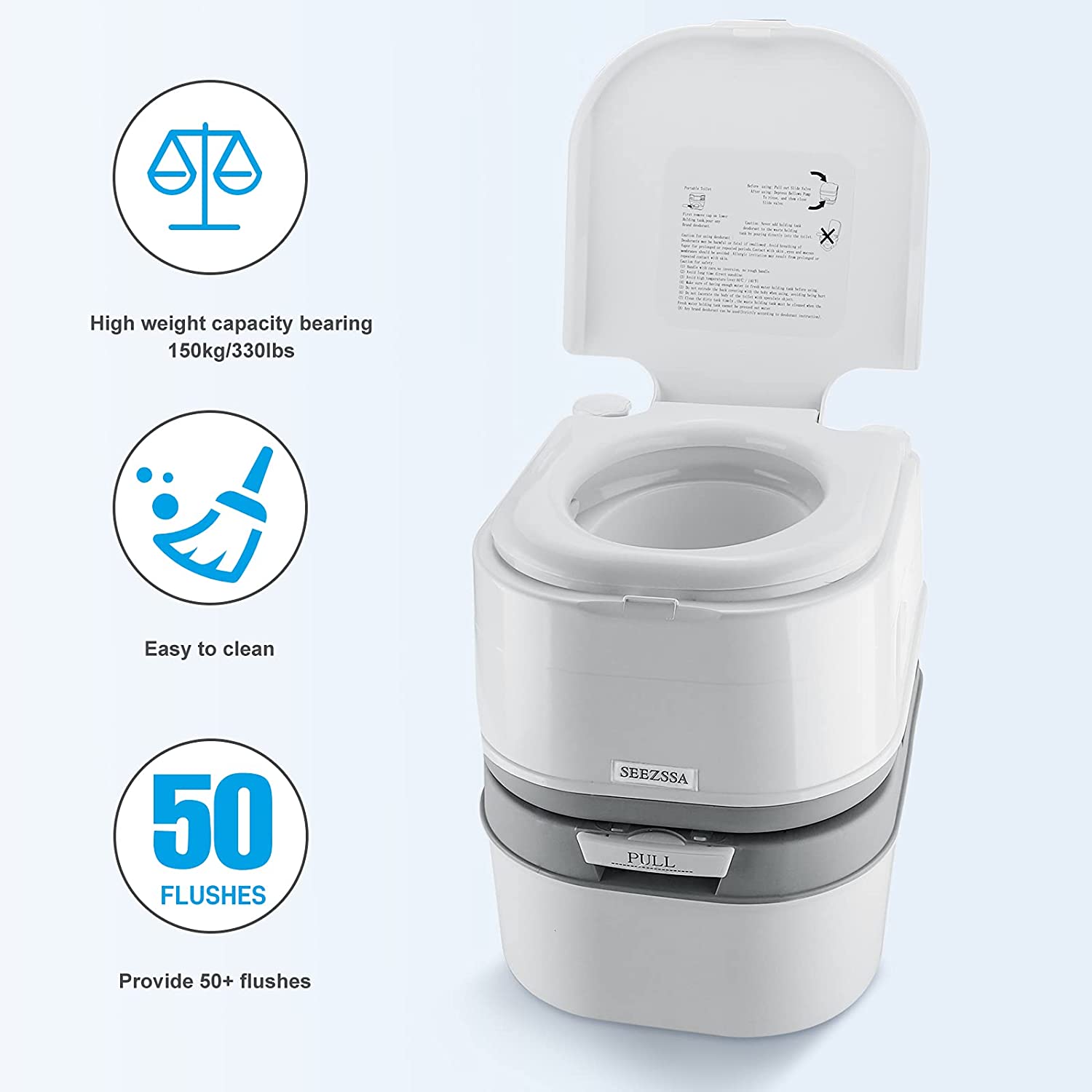
Thetford’s Porta Potti line is ideal for securing waste in a holding tank. The Porta Potti style is divided into two sections. The upper piece includes a detachable seat and cover, as well as a combined flush-water tank and toilet bowl. The waste holding tank is located in the lower part. The two sections readily separate, allowing you to simply and hygienically dump the waste.
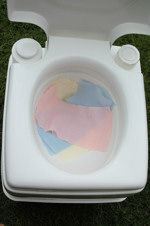
In the bathrooms of many caravans and motorhomes, there are built-in toilets. Thetford and Dometic are the two most common makers of these toilets. They include a cassette waste holding tank, some of the larger tanks come with wheels for easy mobility, allowing you to march confidently to the disposal point with your head held high 🙂
The cassette is usually placed behind a secured panel on the outside of the caravan or motorhome, where it can be removed.
Some toilets may have a swivel bowl to maximise the valuable real estate in the bathroom area, and the flush may be powered by the unit’s pump recreational batteries or the site’s electric hook-up. Some toilets have a separate smaller flushing water tank with a level indicator.
Tanks and Flushing
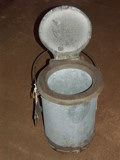
Toilets and holding tanks, like so many other things in the camping and caravanning world, come in a variety of shapes and sizes, ranging from the most basic bucket-with-seat to a plush cassette unit with an electric flush and a ceramic bowl. Many factors will impact your decision, including your means of transport to the site, the volume of waste you expect to collect, and – at the top end – your ability to flush your toilet with electricity.
Take the time to study the instruction booklet for the toilet you choose and make sure you understand how to use it properly. This could mean the difference between a pleasant vacation and one that is a little more smelly.
To give you an idea of how much tank space you’ll need, imagine a couple who only used a chemical toilet and never used the camping facilities. They’d probably fill a 20-litre tank in three days.
Which Chemical
Choose your toilet chemicals wisely because they all work differently. Some kill bacteria, while others employ a biological process to break down waste, and the majority use perfume to cover any odour. Many people use a combination of the two. Many websites, including certain Club websites, may ask that you only use environmentally friendly chemicals.
The main toilet chemical goes into the waste tank. These compounds are available in a range of shapes and sizes. The popular form is a fluid that must be diluted with water. Chemicals in tablet form – or even ‘liquid tablets’ like the cleaning agents for your washing machine – are usually more expensive, so you may decide that the convenience outweighs the extra cost.

If you’re using a flushing toilet, such as those found in caravan and motorhome washrooms, you may want to add a chemical to the water in the flush-water tank. Named after the colour of the early flush-water tank fluids, this chemical is commonly referred to as the ‘pink’ chemical.
Most toilet fluids lose their effectiveness after three days, so it’s important to empty your toilet or refill it with fresh fluid on a frequent basis.
Go Outdoors has a good selection of chemical toilet liquids, and you may save money on them with its rewards card and Club membership.

Do not put anything else down your toilet
It should go without saying that only human waste should be flushed down the toilet. Disposable nappies, as well as any other similar goods, should never be flushed into the tank. A blockage in the toilet or the tank can only be fixed one way!
When it comes to toilet paper, most toilet chemical providers advocate using ‘rapid dissolve’ toilet paper with your unit. This may be a nice idea if your family uses a lot of paper, but in most circumstances, regular toilet paper will suffice and will almost definitely be less expensive.

Disposing of your chemical toilet waste
The Prime Rule of chemical toilets is that they must only be emptied in certain locations. Aside from the obvious sanitary concerns, the chemicals should not be dumped directly into the sewer system.
 Typical Elsan Point
A Chemical Disposal Point, or CDP, will most likely be designated on a campsite. It may show as an Elsan Point on some websites. If you can’t find an official emptying station, your only alternative is to flush the contents of your toilet down a regular toilet. Dumping your chemical toilet waste anywhere else is an offence punishable with hefty fines.
You should never, empty your black waste (toilet cassette contents) in a greywater waste disposal point and also, keep it away from any source of freshwater.
The waste is held in a sealed cassette unless you use the most basic ‘bucket and dump it’s style system’. The instruction booklet for your unit will show you where to find this button.
Bombs Away Odd Chap!
In the 1920s, Elsan was the first to bring the chemical toilet to the market, and the term “Elsan” has come to refer to both toilet fluid and chemical toilets. During WWII, an Elsan was the only ‘convenience of choice for air raid shelters and bomber crews.
Because of the brand’s history and popularity, several campgrounds now refer to their Chemical Disposal Points as Elsan Disposal Points.
Top Tip – Flowers at the end
Finally, here’s a sensitive tip: don’t read any further if you’re easily offended.
Lining the bowl with three pieces of toilet paper around the bowl before use will help keep it clean.
#motorhome #accessories #vanlife #caravan #campervan #selfbuild #scotland #chemicaltoilet
Why not join our Facebook Group and sign up for our Newsletter http://eepurl.com/hND3Ir
Check out the Useful Links Page for more goodies
Newsletter link: YouTube https://www.youtube.com/channel/UC311CaE4YoIEKkJLIJCEl7Q
Twitter https://twitter.com/MotorhomeandC
Instagram https://www.instagram.com/johnnyburr3
Facebook https://www.facebook.com/groups/179155772711444
Pinterest https://www.pinterest.co.uk/johnnyburr3
Buy Me A Coffee https://www.buymeacoffee.com/johnnyburr
How use Motorhome Chemical Toilets
How use Motorhome Chemical Toilets
basically as a matter of fact
because as a result
before as an illustration
besides as can be seen
but as has been noted
certainly as I have noted
chiefly as I have said
comparatively as I have shown
concurrently as long as
consequently as much as
contrarily as shown above
conversely as soon as
correspondingly as well as
despite at any rate
Driving A Motorhome For The First Time

Driving A Motorhome For The First Time In The UK
Everything has its first time, and when it comes to driving a motorhome there are a few things you need to keep in mind when driving a motorhome for the first time.
No matter who you are, any ability you have now, whether it is cooking, driving, or even walking, was acquired at some point. The notion of driving a motorhome for the first time may seem intimidating, but, like everything else, it won’t take long for you to get used to it, and you’ll enjoy the feeling of being behind the wheel as much as the freedom it provides.
However, if you need a little more assurance, we’ve put up a list of items to bear in mind before your first time driving a motorhome.
Why It’s easier than you might think to drive a motorhome?
The vast majority of motorhomes do not require any special skills or training to operate. Although they are larger than a car, anyone who can drive a car can drive a motorhome. This depends on your driving license, basically, if you passed your driving test before January 1997, you have a C1 entitlement which means you can drive a vehicle over 3500kg up to 7500kg. That said the vast majority of motorhomes are 3500kg or under. We will cover this in more detail in another blog.
Anyone with a regular driver’s license can drive a motorhome because the controls are the same as in a car. They’re a little bigger, but the controls are the same, so you shouldn’t have any trouble setting them up.
The wing mirrors are larger – your rearview is limited, but the wing mirrors are massive, giving you plenty of visibility down each side of your priory Rentals motorhome.
The driving position is superior — a motorhome’s cab is much higher than your car’s, giving you a fantastic view of the road ahead and all around you.
Long-distance van drivers want a comfortable place to sit, so motorhomes take top-of-the-line van seats and add luxurious upholstery and additional driver amenities.
You don’t feel the weight as much as you might imagine – motorhomes are much larger and heavier than your car, but they’re built on the foundations of heavy-duty commercial trucks designed to transport large cargo. The steering and other controls were created with the goal of making moving items significantly heavier than a motorhome body.

How to Get the Most Out of Your Motorhome
If you let it, driving a motorhome may be a soothing, almost serene experience. Allow your driving ability to change and the stress in your body to dissipate with each passing hour.
You’re not in a hurry, so don’t rush. When you’re driving your car, you’re probably going somewhere for a certain reason, usually at the same time as everyone else on the road, and you need to be somewhere at a specific time. With a motorhome, however, this is not the case. You’re not on a timetable; you’re on your own schedule, so relax and enjoy the ride. Take it slowly, steadily, and comfortably.
Allow each maneuver to be a special occasion – motorhomes do not dart in and out of traffic; instead, they move slowly and thoughtfully. Plan ahead of time, signal early, and sweep gracefully from lane to lane.
Don’t be hesitant to ask for assistance when parking — you’re unlikely to be traveling alone, so use your passengers to assist you. When it’s a group effort, there’s less tension.
The Best Ways to Drive a Motorhome
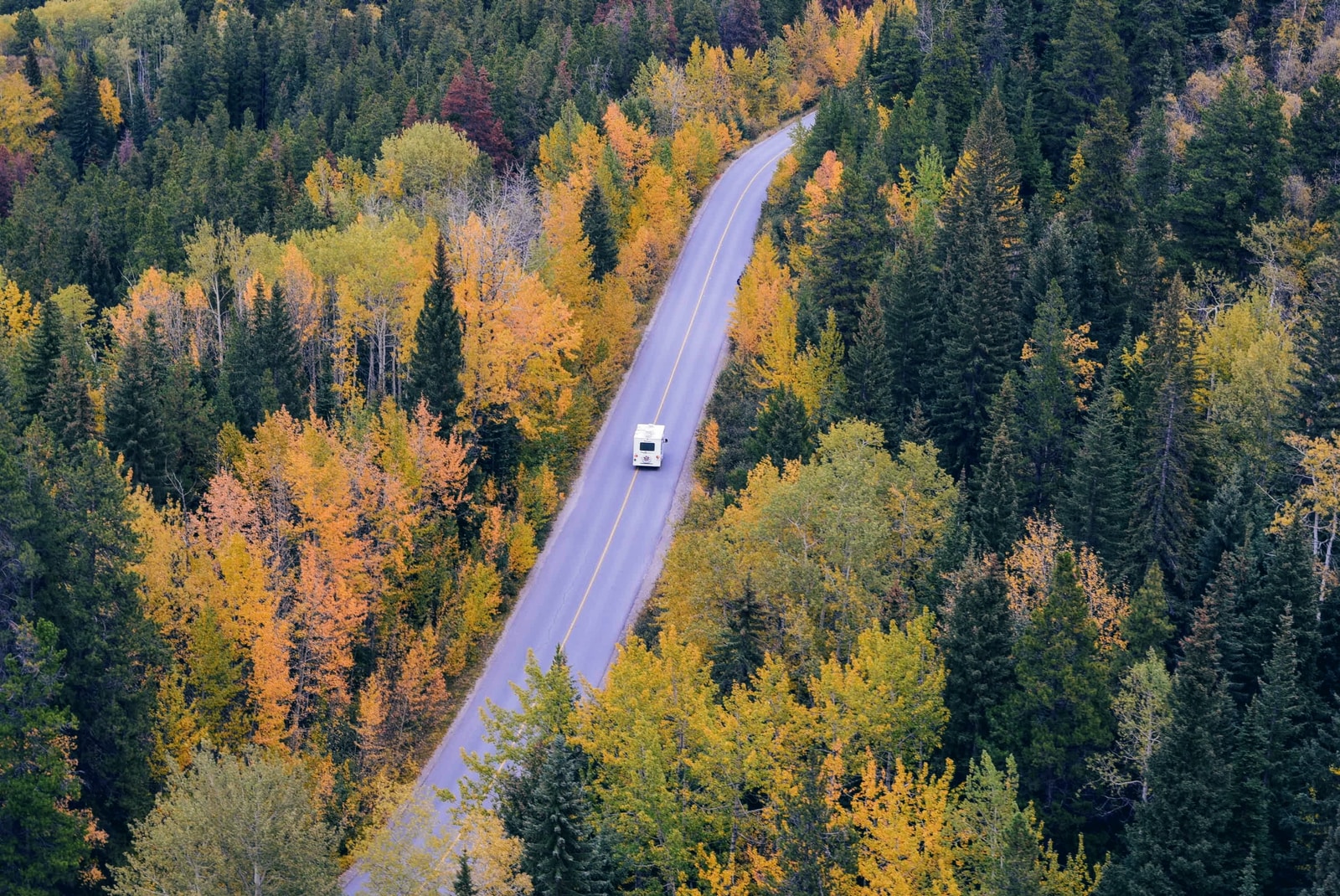
Driving a motorhome is similar to driving a car, with the exception that you must account for the extra size, weight, and length when driving and parking.
Reverse into parking places — it’s usually easier than driving forwards, and it makes driving out a lot easier and less stressful – pedestrians don’t seem to notice you’re not looking!
Take corners and bends much wider – It’s simple to get your motorhome’s front wheels around a corner, but you’ll need to make sure the back wheels do as well, so drive a little past the corner while turning.
Gently accelerate and brake – motorhomes aren’t designed for quick 0-60 times, and their weight means that 60-0 takes longer as well. Gradually increase your speed, and use your enhanced driving position to prepare in advance and brake sooner when necessary.
On vulnerable routes, be extra cautious — motorhomes are high-sided vehicles that are quite lightweight for their size. This means you’ll be more aware of crosswinds, so take it easy if the weather changes.
Know how much height of your motorhome – There should be a note in the manual or in the cab of the Motorhome telling you how tall it is. Keep an eye out for signs that say “max headroom” or “low bridge.” Many sat-navs can also be programmed to keep away from low bridges.
Pull in to passing places on single-track roads — Do you remember being caught behind caravans for miles, hoping the driver would pull over to allow others to pass? Now’s your time to show those motorhomer’s how it’s done and earn some extra positive energy!
Don’t ever be frightened to give driving a motorhome.
When it’s all said and done, there’s nothing stopping you from climbing into the enormous plush chair that serves as the driver’s seat and taking the wheel of a luxury motorhome. Driving a motorhome will be far easier than you might imagine, and we’re confident that when you’ve done it once, you’ll want to do it, again and again, to enjoy life at a slower pace, both on the road and at the campsite.
#motorhome #accessories #vanlife #caravan #campervan #selfbuild #scotland #driving #motorhome
Why not join our Facebook Group and sign up for our Newsletter for Tips and Suggestions, and when new products are released
Check out the Useful Links Page for more goodies
Motorhome and Caravan Clubs for Owners
Tips on Wild Camping in Scotland
Beginners Guide to Hiring a Motorhome and Campervan
Beginners Basic Guide to Hiring a Motorhome and Campervan
Beginners Basic Guide to Hiring a Motorhome and Campervan
Updated 30/09/2024
Are you thinking of Hiring a Motorhome? New to Motorhoming?
The idea of buying a motorhome can seem quite daunting and hiring a motorhome is the best way to start your motorhome journey.
You can firstly, see if it’s for you, many people jump straight in and buy a van only to find a few months later that this type of holiday or break is not for them.
Secondly, you can see if the layout of the van is good for you, it will also give you an idea of what you want in your motorhome in terms of layout.
Many seasoned motorhomers say “Layout, Layout, Layout” is the first thing to decide when buying a motorhome and hiring a motorhome is the best way. It’s great visiting dealers and having a look at what they have to offer but living in that space is completely different, don’t forget it is way smaller than what you’re used to!
So you were thinking of Hiring a Motorhome? What to expect and what to look out for.
So, how much should I anticipate paying?
Expect to pay anything from £100 and £250 each night, on average. There are a number of factors that influence the cost of your rental car, including:
The motorhome’s year of manufacture
The motorhome’s state of repair
The amenities for motorhomes
The motorhome’s dimensions
If there are any extras, such as bedding included,
Where do you intend to travel?
How long will you be renting the vehicle?
What time of year, consider the season.

Compare quotes for a motorhome rental
If you’re renting a campervan for the first time, these costs can seem a little high. You are, however, acquiring a mobile vacation house. It will be completely insured, outfitted, serviced, and cleaned. All you have to do is get in and drive.
You can’t compare it to renting a car since you have to include in the cost of accommodation as well.
So, does it appear to be costly now? When you consider the cost of lodging and transportation with a rented motorhome, it’s a no-brainer. You also get to plan your vacation in a vehicle that might cost up to £70,000 to purchase.
Are there any other costs?
If you’re traveling overseas or island hopping in Scotland, for example, you’ll likely need to take in additional insurance expenses (if you require more than one driver on the policy), fuel costs (including any gas for cooking and heating), camping charges, and ferry prices.
Excess cleaning charges, emptying the toilet, returning without a full tank, and the gas you used from the gas bottle are all possible charges that could be charged upon the return of the motorhome or camper.
The majority of providers will have clear pricing on their websites – school holiday dates will, as always, be the most expensive – but motorhome rental is significantly less expensive in the winter.
How can I receive a precise estimate?
We recommend that you deal with the rental business directly. Make sure you have a broad idea of where you’re going, when you’re going, and who’ll be driving. The customer care representatives will ensure that you receive an accurate price for a vehicle that not only matches your requirements but also fits inside your budget.
Companies that rent motorhomes that we recommend
In the UK and worldwide, there are a large number of motorhome rental firms and independents in Scotland. Here are two firms with excellent reviews, a strong customer service culture, and a wide range of high-quality motorhomes for hire with all the modern conveniences and luxuries you could desire.
Open Road Scotland (Glasgow)

Haven Tourers (Aberdeen)

What can you expect on the day you pick up your ideal Motorhome and your rental begins?
Keep your driver’s license handy!
UK drivers will be required to show their plastic card driver’s license as well as the DVLA share code. To receive the code, you’ll need to go to the DVLA website ahead of time. This gives the motorhome rental firm access to the DVLA’s information. You may also be asked to provide proof of residency in the United Kingdom, such as a recent utility bill or bank statement. https://www.gov.uk/view-driving-licence
Leaving a deposit
You’ll almost certainly need a credit card for the security deposit as well. This will be pre-authorized for the price – usually between £1,000 and £2,000 for a motorhome – just like renting a car. Ensure that it is not deducted but rather pre-authorized. This does imply that you’ll need a certain quantity of cash on hand. If it is deducted, make sure it will be refunded as soon as the RV is returned.
Pack with care.
Don’t bring too much. Although your rental vehicle is large, the space quickly fills up, and transferring all of your belongings from the back of your car to the motorhome will take too long, delaying the start of your trip.
Take a good look at the motorhome or camper van.
It’s crucial to inspect it for any damage and report it, just as you would with a car rental. Make a note of these on the rental agreement form. You may be held liable for the damage if you don’t declare it before signing the paperwork.
Understand how everything works.
Request a complete itinerary of everything from the rental provider. Working from the front to the back is the most efficient method. Ask about all of the controls in the cab, including how to operate the reversing camera if one is available (it may not have a rearview mirror, so you’ll have to rely on the side mirrors and the camera). Check the handbrake’s position (it might not be where you expect it to be and it might have a mechanism to stop it from interfering with any swivel cab seats). If you’re making up beds out of the seats and cushions, follow the steps and then return them to the seats.
Getting gas refilled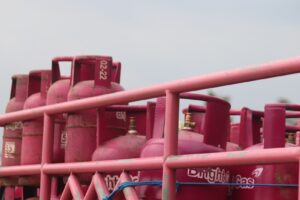

This may be one of the most difficult and intimidating aspects of renting a motorhome, particularly if you are a first-time renter. Is the gas tank (typically underneath the Motorhome with an external filler point on the side) or a stand-alone bottle (in an externally accessible locker) delivered full? If you run out of gas, inquire about how to change the bottle over or fill up the underslung tank.
Filling stations, garden centers, and motorhome dealers all sell replacement bottles. If you get stuck, some campsites have gas bottles on hand, although the quantities and types are never guaranteed. If you have a fixed LPG tank, it’s a good idea to learn how to fill it. In the UK, this usually entails inserting a bayonet-style fitting and pressing a button until the tank is filled. It is frequently released with a loud hiss, which might be disconcerting the first time it occurs, but is very normal! Because not all gas stations provide LPG, use a website like drivelpg.co.uk to locate one near you.
Trickery using electricity
Inquire about the location of the fuses and whether spares are available; they can trip the system, although they should be simple to reset? Look into the control panel (which is usually positioned above the front door) where you should be able to turn on the electrical systems and water pumps. Turn on the television (if one is provided) and check that it is tuned to the appropriate stations. If you’re staying at a campsite with a hook-up, it’s crucial to understand where you connect the electric hook-up cable, where it’s stored, and how to actually plug it in and unplug it.
Putting away your holiday gear
Unless the rental vehicle is local and you can go home to pack, we recommend using bags or folding crates to put your holiday belongings into your car before picking up the rental vehicle. You can either pack properly at the hire depot and leave the crates/bags in the back of the car for your return, or you can store them safely in the motorhome and make a rapid departure, unpacking when you get to your first campsite. If you’re unloading at the rental company, make sure you pack everything safely. Folded items can be stowed away neatly, but they still take up room, so if space is limited, it’s preferable to leave these in the car; however, this requires unpacking and packing at the rental depot.
The smallest space
All motorhomes will be equipped with a cassette toilet, which will be mostly permanently installed. The holding tanks (which may be reached via an external door) will need to be emptied on a regular basis. To lessen smells and aid breakdown, the rental van may come with toilet chemicals (or you may need to offer your own, so verify ahead of time) (certain campsites only allow specific types of chemicals due to their sewerage systems, so check in advance on this too). Make sure you know how to empty the toilet and that you always empty it into a designated area (commonly referred to as Elsan points). If you return a motorhome to the depot with a full tank, you may be charged or forfeit some of your deposit.
Showering in brief bursts
Showering extravaganzas that you would enjoy at home will not work in a motorhome. In most, doing so will drain the whole hot water tank (usually only 12-liters) as well as the majority of the main freshwater tank in minutes. It’s a better idea to wet your body first, then turn it off to lather up. Then turn it back on to rinse yourself. Many people simply use the showers at the campground. Bring flip-flops to protect your feet as you go to and from the shower block.
Getting behind the wheel of a motorhome
Make sure you know the size of your motorhome – the width and height are the most relevant specifications for UK roads, but some may also have a weight limit. Call ahead to see if there are any height or weight limits where you intend to visit. As previously stated, many motorhomes lack a central internal rearview mirror, and even if they do, vision through the rear windows is limited. So, especially on narrow roads or when maneuvering around corners, check your side mirrors frequently. Even if reverse cameras or sensors are installed, ask one of your family members to keep an eye on the back (stand so you can see them in the side mirror).
Stick to the rules!
It’s critical to be considerate when you’re out and about, both in rural areas and in towns you visit. Without previous clearance, it is not acceptable to empty toilets into locations other than approved areas. Bring your rubbish home with you. If you want to view the countryside, don’t park in a passing spot on a single-track road. The Lake District has issued this code of conduct, which offers some sound recommendations regarding motorhome travel in the UK.
FAQ
1: What is included in the motorhome?
Answer: While many motorhomes come equipped with a basic set of pots, crockery, and cutlery, this may be an optional extra. In most cases, you will need to bring your own bedding and towels, but check the choices list to see if there is an extra pack available to make things easier. TVs, awnings, outdoor furniture, and even bicycles may all be included.
2: Can I bring a hairdryer with me?
Answer: High-watt electrical appliances (such as kettles, straighteners, hairdryers, and microwaves) are not recommended. Without an inverter, motorhome electrical systems work on 12V electricity, which will not charge or power 230V devices. If a battery is not connected to the mains hook up or charger, using an inverter to power or charge appliances may quickly drain it. Even if your campsite has a mains hook-up, certain campsite electrics may not be able to handle the demands of certain power-hungry items. Hairdryers with built-in outlets or suitable electrical outlets are prevalent at campgrounds.
3: What is the maximum capacity of a motorhome?
Answer: Motorhomes come in several shapes and sizes, sleeping anywhere from two to seven people. However, you must make sure that each passenger has a seatbelt. Seatbelts are only installed on the two cab seats in some motorhomes. If you’re taking passengers in the back, make sure they’re seated in approved travel seats and wearing a three-point seatbelt. Don’t take rear passengers if you don’t have seatbelts in the back. You must use car seats if you are transporting youngsters who require them. Some models include Isofix fixes, but only a few, so double-check. Also, many coach-built motorhomes’ rear dinette seating is may not be designed for a child car seat, so if you’re transporting a youngster, use the passenger cab seat. If you must use the back seat, place the child seat closest to the wall and an adult beside it.
4: What should I do if I need to cancel or reschedule my rental?
Answer: If you complete this in a fair amount of time, you might be able to obtain some of your investment returned. However, review the cancellation policy of the rental company, since it will detail the refund process. To protect yourself from this, you might want to look into purchasing travel insurance.
In summary
My personal experience of hiring was excellent. After hunting around I settled on a firm in Glasgow right next to the airport. Extremely easy to get to from where I lived in Camden North London, via Heathrow Airport (2.5 – 3 hrs door to door)
These guys were brilliant, everything was included all I had to bring was myself and my clothes. Bed linen, pots & pans, knives and forks, cleaning utensils, toilet chemicals, hook-up lead, LPG gas, hose, bucket, TV, Caravan and Camping Club Membership, AA Recovery, Pick up from the airport, and much much more was included and free. They even had put away my groceries that were pre-ordered from Sainsbury’s the day before! Needless to say, I have used them many times since!!
I can not recommend Open Road Scotland enough, you will not go wrong with these guys!!
The moral here is to check Google Reviews and Trustpilot, to see what others are saying about the rental companies you are looking at. Understand their terms and conditions so you have no surprises when you pick your motorhome up.
Driving away from the rental company can be a daunting prospect, but don’t panic, relax and take your time there is no rush.
JB
Thinking of Hiring a Motorhome?
#motorhome #accessories #vanlife #caravan #campervan #selfbuild #scotland #motorhomehire Thinking of Hiring a Motorhome
Why not join our Facebook Group and sign up for our Newsletter for Tips and Suggestions, and when new products are released
Check out the Useful Links Page for more goodies
Thinking of Hiring a Motorhome?
Motorhome and Caravan Clubs for Owners
Are you thinking of hiring a motorhome?
Driving a motorhome for the first time in the UK
Tips on Wild Camping in Scotland